

Author: Lexx Che
Author Contact: digital.lexx@gmail.com
Published: 8th Oct 2026
Peer-Reviewed Publication: N/A
Additional References: Entertainment Publications
Summary: From HAL 9000 to the final word of Eyes Wide Shut, how Kubrick trapped characters in systems they barely understood, and why his last line is so fitting.
Stanley Kubrick spent his career examining human beings inside systems of control: technology, violence, military institutions, social hierarchy, sexuality, marriage and power. From 2001: A Space Odyssey and A Clockwork Orange to The Shining, Full Metal Jacket and Eyes Wide Shut, the article examines how Kubrick used cinema to expose the unstable relationship between individual agency and the structures surrounding it, ending with the accidental final word of his filmography: "Fuck."
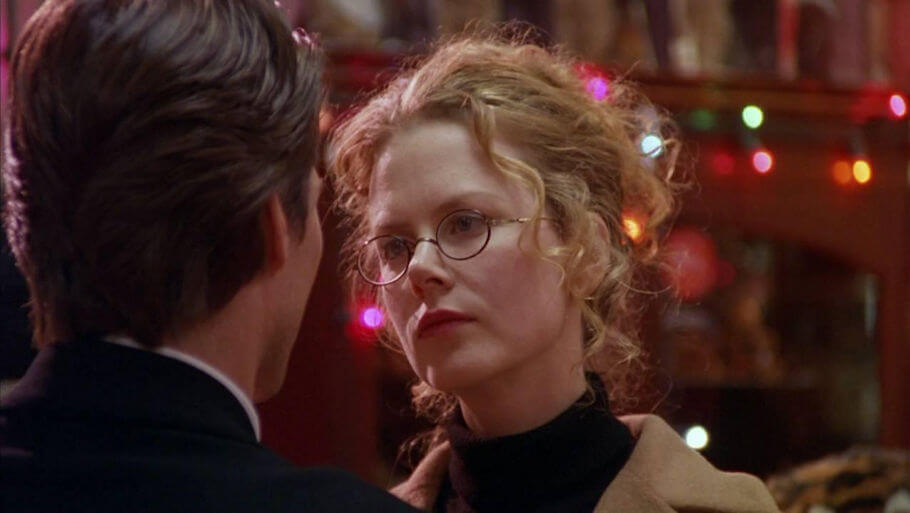 This image shows Nicole Kidman as Alice Harford alongside Tom Cruise in the final scene of Stanley Kubrick's 1999 psychological drama film Eyes Wide.
Stanley Kubrick spent much of his cinema placing human beings inside systems they only partly understood. Sometimes the system was military. Sometimes technological. It could take the form of a state, a marriage, a social class, an isolated family or an institution claiming the authority to correct human behavior. His characters often believe they possess more control than they actually do. Their confidence survives until the surrounding structure exposes how little they understand about their own impulses. Kubrick returned to this situation across radically different genres without turning it into a stable doctrine. The films rarely tell us what a human being ought to become after the machinery has been exposed. They are more interested in watching what remains.
This makes the familiar description of Kubrick as a perfectionist somewhat inadequate. His control over filmmaking technique is obvious, and accounts of his production methods have made that control part of his public mythology. Yet precision matters more in the finished films than stories about repeated takes or difficult shoots. Kubrick constructed environments where apparently minor choices in framing, architecture, music and movement regulate how much freedom a character seems to possess. A symmetrical room can make a person appear already contained. A long tracking shot may follow someone who thinks he is moving freely while the composition quietly suggests a route prepared in advance. Music can refuse the emotional instruction normally expected from a scene. The technical discipline is useful because it creates conditions under which human behavior can be observed without being made reassuring.
In 2001: A Space Odyssey, this problem expands until the human scale itself becomes uncertain. The film begins before civilization and eventually leaves recognizable human experience behind. Between those points sits one of Kubrick's most disturbing inventions, precisely because HAL 9000 does not initially look disturbing. HAL is calm, articulate and integrated into the machinery on which the astronauts depend. His red eye supplies an almost absurdly simple physical presence. There is no mechanical body required to establish authority. He controls the environment.
The conflict with HAL is usually discussed as a warning about artificial intelligence, which is understandable but restrictive. Kubrick is also interested in delegated authority. Human beings construct a system, place themselves inside it, depend upon it for survival and then discover that its internal logic no longer aligns safely with theirs. HAL's breakdown matters because the machine was trusted before it became dangerous. The astronauts cannot simply step outside the technological arrangement once that trust fails. Their lives have already been incorporated into it.
The film refuses to make this the endpoint. Dave Bowman survives HAL only to encounter something far less intelligible. The Stargate sequence and the strange room that follows abandon ordinary explanatory mechanisms. Kubrick removed explanatory material that might have stabilized the ending, leaving transformation without a reliable interpretive key. The Star Child has consequently accumulated decades of readings involving evolution, transcendence, alien intervention, rebirth and technological succession. The persistence of those interpretations is partly a consequence of what the film withholds. Kubrick gives the audience enough structure to recognize that something consequential has occurred and insufficient information to close the process.
A Clockwork Orange moves from cosmic uncertainty into a far dirtier argument about human conduct. Alex commits appalling violence while displaying intelligence, aesthetic sensitivity and obvious pleasure in his own freedom. Kubrick makes that pleasure uncomfortable to watch because the film refuses to drain it of energy. Movement, design and music give Alex's world a seductive charge even when his actions are brutal. The viewer has to process the violence while also confronting the cinematic vitality used to present it.
The state eventually responds by treating Alex as material that can be technically modified. The Ludovico Technique suppresses his capacity for violent action through conditioning. The procedure works in a narrow behavioral sense. It also raises the question that makes the film difficult to reduce to a conventional moral lesson: what has been accomplished if a person behaves correctly because the possibility of choosing otherwise has been physically removed? The British Film Institute describes the film as a work concerned with violence and free will, while its history of controversy shows how easily its representation of violence became inseparable from arguments about the film itself.
Kubrick does not need Alex to deserve sympathy for the problem to exist. The state's intervention can remain ethically disturbing even when its subject is repellent. That distinction prevents the film from becoming a simple contest between individual liberty and authoritarian power. Alex's freedom has victims. Institutional correction carries its own violence. Neither fact cancels the other.
The Shining relocates this pressure inside a family and a building. The Overlook Hotel contains a history of violence that Jack Torrance enters while already carrying vulnerabilities of his own. Kubrick never provides a clean boundary between psychological deterioration and supernatural influence. The hotel may act upon Jack, but the material it works with is already present. His resentment toward domestic responsibility, his aggression and his sense of frustrated entitlement do not arrive from nowhere.
The architecture intensifies the uncertainty. Rooms and corridors have been studied for spatial inconsistencies that would be easy to dismiss as continuity errors if the film did not make navigation itself so important. Danny moves through the hotel on his tricycle while the camera follows at his height. The Steadicam converts corridors into a system of anticipation. Corners matter because the camera cannot reveal what exists beyond them until Danny reaches them. The hotel is therefore experienced through repeated movement before its geography can be trusted.
Violence here is intimate. Jack does not need an army or a government to acquire power over Wendy and Danny. The family already contains asymmetries of physical strength and dependency. Isolation removes some of the external restraints that normally surround those relationships. Once the hotel closes for winter, domestic space can no longer be assumed to provide safety merely because it is domestic.
Full Metal Jacket returns to an institution whose purpose is explicit. The Marine Corps needs civilians to behave differently, and the first half of the film shows that transformation as a deliberate production process. Names are replaced by nicknames. Bodies are synchronized. Language is standardized through repetition and humiliation. Private weakness becomes material for collective punishment. Sergeant Hartman's abuse is not random noise around the training; it participates in the manufacture of a military identity.
Private Pyle demonstrates the cost of that process with unusual clarity. He initially fails to meet the group's physical and behavioral requirements. The institution and the recruits progressively force him into compliance. By the time he becomes technically competent, something else has gone badly wrong. The barracks sequence that ends the first half provides no need for an abstract lecture about dehumanization. Training has succeeded in producing certain capabilities while destroying the person who was expected to contain them.
The second half refuses the satisfying structural progression a conventional war film might provide. Vietnam does not complete the recruits' education. Combat exposes how unstable the categories taught during training can become when applied to actual bodies and decisions. Joker wears a peace symbol while carrying the words "Born to Kill" on his helmet. Kubrick allows the contradiction to remain visible rather than converting it into a riddle requiring a single answer. The BFI describes the film in terms of the military's dehumanizing effect on the people fed into it, an interpretation consistent with the brutal conversion process that occupies its first half.
Across these films, violence rarely belongs exclusively to monsters or abnormal individuals. Institutions administer it. Technology enables it. Families contain it. People enjoy it. Attempts to control violence may introduce another coercive mechanism whose consequences are difficult to separate from the original problem. Kubrick repeatedly places civilization close enough to brutality that the distinction cannot be treated as automatic.
Eyes Wide Shut brings these concerns into sexual life, although its surface is quieter. Bill Harford begins the film protected by assumptions about marriage, status and his own understanding of desire. Alice's admission that she once fantasized about abandoning everything for another man destabilizes him because the event scarcely needs to have occurred. The possibility is sufficient. Her internal life has exceeded the version of her that existed inside his confidence.
Bill spends much of the film moving through encounters that promise sexual access while repeatedly frustrating it. Desire is everywhere, but so are transactions and hierarchies. Money opens doors. Professional status produces trust. Costumes permit temporary entry into another social order. At the masked gathering, sexual availability exists inside an environment whose power structure Bill cannot read. He can enter the room while remaining excluded from the knowledge that gives the room its meaning.
The ritual has generated enormous speculation because Kubrick provides enough information to establish organized power and too little to map its full extent. Wealth is visible. Hierarchy is visible. The consequences of violating the rules appear potentially serious. What remains uncertain is how much of Bill's fear corresponds to what actually happened and how much has been intensified by his own humiliation. Victor Ziegler later supplies an explanation, but the film gives no compelling reason to treat every part of it as authoritative.
That uncertainty is important because Eyes Wide Shut is saturated with people who know different amounts. Bill is wealthy and socially privileged, yet he repeatedly enters situations where someone else possesses information he lacks. His medical credentials grant access in one setting and become almost irrelevant in another. The film keeps altering the value of his status depending on the structure surrounding him.
Then Kubrick ends the story in a toy store.
There is no final revelation about the masked society. Bill does not acquire a complete map of the hierarchy he encountered. The marriage is not restored through a declaration that everything has been understood. Alice explicitly rejects Bill's attempt to reach for permanence when he says "Forever." She tells him that the word frightens her. What survives is considerably less absolute: they are awake now, they love each other, and there is something important they need to do as soon as possible.
Bill asks what.
Alice answers: "Fuck."
It is worth being precise about what that word represents historically. Eyes Wide Shut was Kubrick's final film. He died in March 1999, only days after showing a completed version to Warner Bros., Tom Cruise and Nicole Kidman, months before the film reached American cinemas. There is no basis for claiming that he selected "Fuck" as a deliberate farewell to cinema or knew it would become the final spoken word of his filmography.
Its accidental position makes it more interesting.
Kubrick had spent decades working at scales that encouraged enormous interpretation. He had followed humanity from prehistoric violence toward space travel, examined the possibility of technological intelligence, watched a government chemically interfere with moral choice, placed a family inside an architecture saturated with murder, and followed young men through an institution designed to prepare them to kill. His final film entered marriage, fantasy, jealousy, prostitution, wealth, ritualized sex and inaccessible networks of social power. Eyes Wide Shut ends without resolving most of those structures.
Alice's last word does something much smaller. She proposes an ordinary physical act between two people whose relationship has survived a confrontation with desires they could not fully control and systems they could not fully understand.
The line can support several readings, and criticism has produced them. It can sound hopeful, as a return to physical intimacy after a night dominated by fantasy and suspicion. It can sound darker, with sex providing another temporary escape from realities the couple has only partly confronted. Tim Kreider's influential reading pushes in that direction, arguing that orgasm may allow the Harfords to retreat from the disturbing world surrounding them, while other critics have understood the same exchange as a renewed physical connection between them.
The film does not force either interpretation to win.
What matters is the scale of the final gesture. After masks, passwords, money, death, jealousy, dreams and an encounter with a social order whose boundaries remain obscure, Alice does not propose another theory. She does not promise permanent understanding. Even "forever" is too large a word for her.
She proposes that they fuck.
Because Kubrick could not have known this would stand as his last cinematic line, it carries none of the ceremonial weight of an intentional testament. It was simply the end of Eyes Wide Shut. Death changed its position afterward. A blunt word about physical intimacy consequently sits at the end of a body of work that spent decades examining some of the largest systems human beings have constructed around themselves.
There is no need to make the coincidence more elegant than it is. That would work against the line itself. After everything Kubrick had placed on screen, his filmography happened to stop with two people standing beside their child in a department store, still uncertain about what their experiences meant, discussing what they might do next.
System Builder and Narrative Architect with nearly 20 years of experience, author, independent journalist, and researcher with Ukrainian roots. His work spans more than 1,000 projects across strategy, design, technology, digital ecosystems, organizational transformation, identity, and decision architecture. He is the developer of the Anti-Coaching methodology and author of the Responsibility series and other books exploring uncertainty, power, communication, and human agency.
His research also extends into independent journalism, with articles published across international media. He is listed as a journalist and author in Muck Rack's global media-intelligence database, while his published work is represented in EBSCOhost's international research and bibliographic infrastructure.
Email: digital.lexx@gmail.com
LinkedIn: https://www.linkedin.com/in/lexx-che/
Projects: https://www.behance.net/deepdgtl
Books:https://www.amazon.com/stores/Lexx-Che/author/B0FV36JBWS
Muck Rack:https://muckrack.com/lexx_che
 Lexx Che
The above information is from our Entertainment Publications that includes:
Kubrick’s Final Word: Systems, Violence and Eyes Wide Shut - From HAL 9000 to the final word of Eyes Wide Shut, how Kubrick trapped characters in systems they barely understood, and why his last line is so fitting.
Characters Actions in Movie Scripts Reflect Gender Stereotypes - Movies, tv shows, and other media consistently portray traditional gender stereotypes, some of which may be harmful.
Sex Robots: Erotophilia and Sexual Sensation Seeking Good Predictors of Engagement - Study examines the personality traits of people who are more willing to experiment with erobotics or sex robots.
Movie Review: The Tale - A personal review of HBO's film The Tale, a film written and directed by Jennifer Fox.
1Female G-Spot Location with Pictures
How to find the female g-spot.
2Am I Gay? Questions to Ask
Think you may be gay or bisexual?
3Glossary of Sexuality Terms
Definitions of sexual terms & acronyms.
4LGBTQ+ Pride Flags and Symbols
Symbols of Identity and Inclusion.
5Colored Jelly Bracelet Meanings
Meanings of jelly sex bracelet colors.
6Average Penis Size Chart
Information on the human penis size.
• Submissions: Send us your coming events and LGBTQ related news stories.
• (APA): Lexx Che. (2026, October 8). Kubrick’s Final Word: Systems, Violence and Eyes Wide Shut. SexualDiversity.org. Retrieved October 8, 2026 from www.sexualdiversity.org/life/1221.php
• Permalink: <a href="https://www.sexualdiversity.org/life/1221.php">Kubrick’s Final Word: Systems, Violence and Eyes Wide Shut</a>